Persistent breakouts, painful lumps, dark marks and uneven texture do not all need the same treatment. By the end, you can identify whether you need active acne care, scar assessment, medical review or simply more time for temporary marks to fade.
Key takeaways
- Seek care for painful, recurring acne or breakouts that leave marks.
- A flat red or brown mark is not the same as a depressed scar.
- Choose a dermatologist when proper self-care has not improved acne.
- Confirm your diagnosis, skin type, risks and treatment plan before a procedure.
Which acne symptoms mean you should seek treatment?
Seek acne treatment before breakouts become severe if they persist, recur, hurt, leave dark marks, or interfere with confidence, work, social life or daily routines. Book an assessment if a consistent, appropriate over-the-counter trial has not improved them.
Persistent acne does not always mean an emergency, but these warning signs need dermatologist assessment:
| Symptom | What it may indicate | What to do |
|---|---|---|
| Deep nodules or cysts | Severe, scarring acne | Arrange prompt review |
| Widespread or rapidly worsening lesions | Severe inflammation or another eruption | Seek medical assessment |
| Sudden adult-onset acne | Medicine-related, hormonal or other skin condition | Ask a dermatologist to investigate |
| Fever or suspected infection | Infection rather than ordinary acne | Seek prompt care |
| Sudden excess facial hair or irregular periods | Possible hormonal disorder | Request medical evaluation |
Medical options can include benzoyl peroxide, adapalene or tretinoin, topical antibiotics only with benzoyl peroxide, selected oral antibiotics, hormonal treatment for some women, and isotretinoin for severe or treatment-resistant acne. These are not a self-prescription plan. Isotretinoin is not a cosmetic clean-up treatment; it requires clinician supervision.
Pregnancy, planned pregnancy and breastfeeding change which treatments are suitable. Acne-like eruptions can also result from medicines, hormonal changes or other skin conditions, so the search intent behind acne and acne scar treatment belapur who needs it starts with identifying the cause, not choosing a procedure.
How can you tell active acne from a temporary mark?
A simple visual check separates a current breakout from a mark:
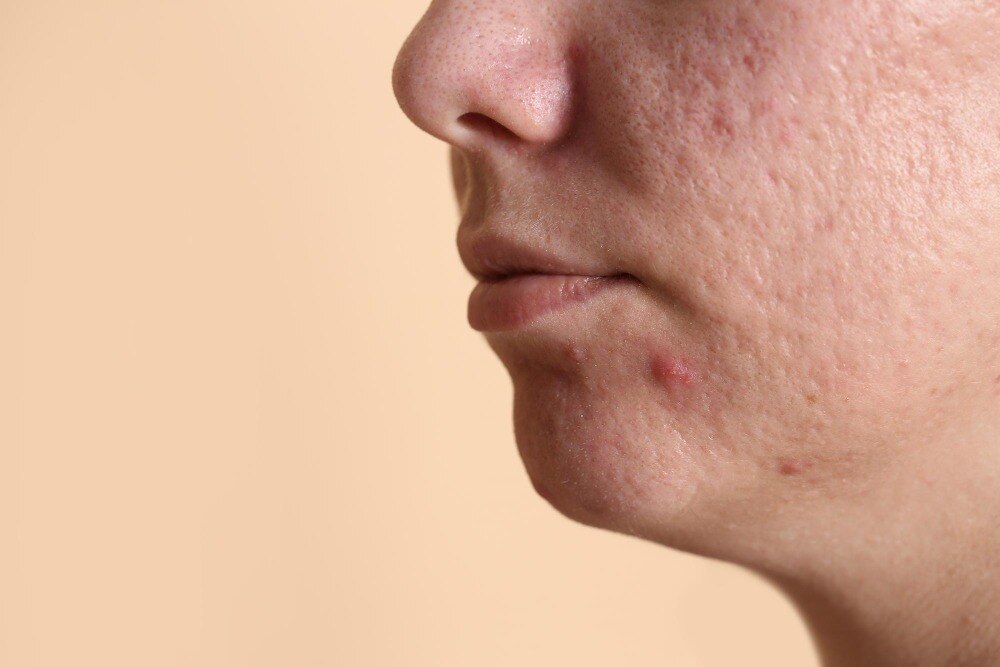
- Active acne: new whiteheads, blackheads, inflamed papules, pustules, painful nodules or cysts. These are raised, blocked or inflamed lesions, so treat the acne before considering scar procedures.
- Post-inflammatory hyperpigmentation: a flat brown or grey area left after a lesion heals. It is colour change, not a permanent textural scar.
- Post-inflammatory erythema: a flat red or pink mark that lingers after inflammation settles. It also does not create a depression.
- Atrophic scarring: a dip, pit or uneven surface that remains after the acne has healed. Ice-pick, rolling and boxcar scars belong in this group and need a scar-specific assessment.
Brown, grey, red and pink marks often fade with time, daily broad-spectrum sunscreen and control of new acne. Use a non-comedogenic moisturiser to support the skin barrier. A depression that remains cannot be judged like a temporary mark.
The practical rule is clear: if new inflamed lesions are still forming, control acne first. Do not start microneedling, laser, peels or another scar procedure while acne is uncontrolled; added inflammation can create further marks and make residual scarring difficult to assess.
Avoid squeezing, picking, home needling, frequent extraction and unregulated products. They increase inflammation, infection, pigmentation and permanent scarring. If you are searching for acne treatment belapur, seek an assessment before choosing a scar procedure.
Who needs treatment for established acne scars?
You need acne scar treatment belapur if active acne has settled but depressed texture, pitted scars, raised scars, persistent redness or marks remain longer than expected. Ice-pick, rolling and boxcar scars are atrophic scars; thick scars that rise above surrounding skin are hypertrophic scars or keloids.
| What you see | What it may indicate | Why assessment matters |
|---|---|---|
| Brown or grey mark | Post-inflammatory hyperpigmentation | Needs a different approach from textural scarring |
| Red or pink mark | Post-inflammatory erythema | May need redness-focused care rather than resurfacing |
| Depression or uneven surface | Atrophic scar | Treatment depends on depth and scar pattern |
| Thick, raised growth | Hypertrophic scar or keloid | Some procedures can worsen abnormal scar growth |
A photograph-free self-diagnosis is unreliable because marks, depressions and raised scars require different treatment. A clinician may consider microneedling, fractional laser resurfacing, subcision, chemical reconstruction techniques, fillers or combinations for depressed scars. One procedure is unlikely to suit every scar type.
These treatments can improve texture but do not reliably recreate completely unscarred skin. Darker skin tones carry greater risk of post-inflammatory hyperpigmentation and, with some aggressive lasers or peels, hypopigmentation or scarring. A stronger setting is not automatically better.
Tell the clinician about previous keloids after piercings, surgery or minor injuries before treatment. If new inflamed acne is still forming, control it first; procedures can add inflammation and create more scarring.
When should you choose a dermatologist instead of self-treatment?
Choose a dermatologist when acne stops being a routine skincare problem and starts raising questions about infection, hormones, medicines or permanent scarring. Seek prompt medical review for:
- Very painful, rapidly spreading lesions, large deep nodules, fever or suspected infection
- Sudden adult-onset acne, recurrent or widespread breakouts, or acne that is already scarring
- Acne with sudden excess facial hair or irregular periods
A dermatologist can assess severity, review medicines and previous treatment, investigate hormonal factors and choose suitable topical or oral therapy. A cosmetic clinic visit is the wrong first step when you may need infection treatment, severe cystic-acne management, medication review or hormonal investigation.
| Self-treatment | Appropriate boundary | What can go wrong |
|---|---|---|
| Routine skincare advice | Mild, occasional breakouts without warning signs | Uncontrolled acne continues and leaves marks or scars |
| Dermatologist assessment | Persistent, painful or recurrent acne, failed over-the-counter treatment, or sudden unusual acne | Treating the wrong cause delays effective care |
| Acne and acne scar treatment Kharghar or Belapur | Choose based on medical assessment, not location alone | A convenient clinic cannot replace diagnostic expertise |
Acne treatment commonly takes weeks rather than days. First-line treatment is generally reviewed around 12 weeks, not abandoned after a few days of dryness or irritation. Use topical or oral antibiotics only within a reviewed plan; never use them alone or continue them indefinitely, because antibiotic resistance can develop.
A dermatologist may adjust treatment gradually and recommend a non-comedogenic moisturiser.
What should an acne and scar consultation check before a procedure?
A useful skin clinic acne care consultation must assess more than the visible scar. Before agreeing to acne and acne scar treatment belapur, confirm:
1. Ask the clinician to identify your acne type and severity, whether new lesions are still forming, and whether treatment must control active acne first. New inflammation can create further scarring and obscure the true residual scar.
2. Ask for the exact scar diagnosis: ice-pick, rolling or boxcar atrophic scars; raised hypertrophic scars or keloids; or post-inflammatory brown, grey, red or pink marks. Skin tone and your tendency toward post-inflammatory pigmentation affect procedure choice.
3. Share every current skincare product, prescription and non-prescription medicine. Disclose pregnancy, planned pregnancy or breastfeeding before treatment.
4. Report keloids or thick scars after piercings, surgery or minor injuries, plus any history of poor wound healing. This matters before microneedling, laser, peels or other procedures because injury can trigger abnormal scar growth.
5. Ask which procedure is recommended, why it fits your scar type, what alternatives exist, how many sessions may be needed, expected downtime, sun-protection requirements and the risks of pigmentation, infection, burns and abnormal scarring.
For a Belapur clinic comparison, check medical supervision, diagnosis before device selection, alternatives and a plan to control active acne. Be You Aesthetics is one clinic a Belapur reader may contact, but confirm the clinician’s contraindication review and treatment plan rather than assuming every advertised procedure suits you.
Related services
Acne & Acne Scar Treatment At Be You Aesthetics Clinic, under the expert care of Dr. Supriya Shirukar, we offer advanced and personalized solutions for Acne and Acne Scars. View service → |
Laser Acne Treatment At Be You Aesthetics Clinic, Dr. Supriya Shirukar offers advanced Laser Acne Treatment designed to effectively reduce acne, scars, and blemishes for... View service → |
Frequently asked questions
Which acne symptoms mean you should seek treatment?
Seek treatment when acne persists, returns frequently, hurts, forms deep lumps, leaves dark marks, or affects your confidence, work, social life or daily routines. Arrange an assessment when a consistent, appropriate over-the-counter trial has not improved it.
How can you tell active acne from a temporary mark?
Active acne includes new or tender bumps, whiteheads, blackheads, pustules and deeper nodules. A flat red, pink or brown area left after a spot has healed is usually a temporary post-inflammatory mark, not a depressed scar.
Who needs treatment for established acne scars?
Consider scar treatment when uneven texture, narrow pits, rolling depressions or raised scars remain after active acne is controlled and continue to bother you. A dermatologist must identify the scar type before selecting a procedure.
When should you choose a dermatologist instead of self-treatment?
Choose a dermatologist for painful or deep acne, repeated breakouts, scarring, widespread inflammation, acne that affects daily life, or acne that has not improved with a suitable over-the-counter routine.
What should an acne and scar consultation check before a procedure?
The consultation should check whether acne is active, distinguish dark marks from scars, classify scar type, review previous treatments and medicines, assess skin tone and healing history, and explain expected results, risks, downtime and aftercare.
Related services
Laser Skin Resurfacing Treatment Laser Skin Resurfacing Treatment At Be You Aesthetics Clinic, under the expert care of Dr. Supriya Shirukar, our Laser Skin Resurfacing treatment helps you achieve smoother, younger,... View service → |
Micro-Needling Treatment At Be You Aesthetics Clinic, under the expert care of Dr. Supriya Shirukar, the Micro-Needling treatment offers a safe, effective, and minimally... View service → |
Keywords