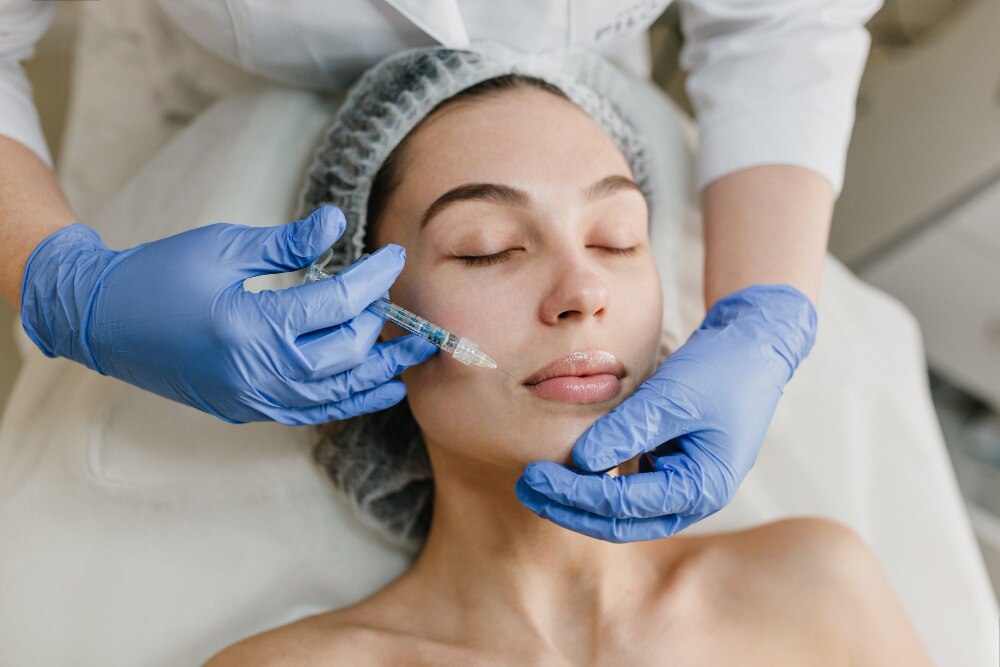
Swelling, bruising, firmness and unevenness can be part of early recovery, but escalating pain, changing skin colour, fever or visual symptoms require a different response. You will learn how to triage the problem, contact the right clinician, preserve useful treatment records and judge whether a clinic has a safe plan for complications.
Key takeaways
- Track whether swelling, pain or skin colour is improving or worsening.
- Seek emergency care for severe pain, pale or dusky skin, vision changes or weakness.
- Give your injector the product name, injection sites, timing and symptom changes.
- Choose a clinic that explains its complication plan before treatment.
Separate expected recovery from a possible complication
Mild swelling, redness, tenderness, bruising and firmness soon after injection are common, but they should start settling over the first few days. Assess the timing, severity and direction of change rather than treating every lump as an emergency or dismissing every change as normal.
- Early uneven swelling can create temporary asymmetry. Overcorrection, misplaced filler or migration becomes a cosmetic concern that needs review after swelling settles; do not correct it with another injection.
- Persistent asymmetry, a firm nodule or a lump that remains beyond the early recovery period deserves examination, not repeated massage. A nodule appearing weeks, months or years later could reflect inflammation, infection, granuloma or misplaced material, and each requires different treatment.
- Increasing warmth, spreading redness, pus, fever or feeling unwell points toward infection and needs prompt medical review. Sudden severe or worsening pain, pale, white, grey, dusky or mottled skin, unusual coolness, delayed capillary refill, rapidly increasing swelling or sharply demarcated discoloration require immediate assessment for vascular occlusion.
These danger signs can indicate blocked blood flow, so waiting for swelling to resolve is unsafe. If you are searching dermal filler problems Kharghar or comparing skin clinic Kharghar fillers, ask how the clinic assesses persistent lumps, infection and vascular occlusion before accepting reassurance or further treatment.
Know when filler symptoms require emergency action
Severe or escalating pain, pale or grey skin, mottled discoloration, rapidly increasing swelling or unusual coolness after injection requires immediate action. Reduced blood flow can damage skin, so do not wait for bruising or swelling to settle. Whether you searched for dermal filler for problems or a skin clinic in Kharghar, use this pathway:
1. Stop the injection if it is still underway. Do not apply pressure, rub or massage the area unless a clinician directs you.
2. Contact the injecting clinic urgently and state the symptom, location and time it began. If the clinic cannot respond immediately, seek emergency medical assessment.
3. Treat new blurred vision, loss of vision, double vision, eye pain, severe headache, facial weakness, confusion, speech difficulty or weakness in an arm or leg as an emergency. Notify the injector while arranging immediate hospital or ophthalmic care; do not wait for a routine follow-up appointment.
4. Bring the filler name, injection date and treatment area. A qualified clinician must identify the product and examine the affected tissue before treatment.
Hyaluronidase can dissolve hyaluronic-acid filler when a clinician believes it is causing the complication, but it is not a universal antidote. Calcium hydroxylapatite, poly-L-lactic acid and permanent fillers require different management and are not dissolved in the same way. The exact product changes the emergency plan.
Give the injector the information needed to act quickly
Call the injector or clinic immediately using the emergency contact provided at treatment. State the injection date, the first symptom, its exact location and whether it is worsening. Do not wait for a routine appointment if severe pain, pale or grey skin, mottling, rapidly increasing swelling, unusual coolness, vision change or neurological symptoms appear.
- One straight-on image
- One image from each side
- One close-up of the affected area
- One full-face image if the change is spreading or affects facial symmetry
2. Gather the treatment record. Note the product name, filler type, amount used, treatment area, injector’s name, lot or batch number and injection record. Keep the box, vial label, consent form, invoice and before-treatment photographs.
3. Prepare your medical information. List medicines and supplements, allergies, previous fillers, prior cold sores and relevant medical conditions.
4. Write a timeline covering the injection time, onset of pain or colour change, swelling progression, fever, drainage and any vision or neurological symptom.
If you seek a second opinion, provide these records before accepting corrective filler. A second injection can worsen asymmetry, nodules or obstruction, so examination and identification of the material must come first. This is a key safeguard during a dermal filler consultation in Belapur or elsewhere.
If the injector cannot be reached and red-flag symptoms are present, go to an emergency department. Do not wait for a callback.
Use aftercare instructions without masking a problem
Follow the treating clinician’s written dermal filler aftercare plan; there is no single recovery schedule for every product or injection site.
- Do not rub, press or self-massage the area. Use a cold compress only as the clinic directs.
- Limit strenuous exercise, saunas, hot baths and other heat exposure for the advised period.
- Avoid facial devices and vigorous cosmetic treatments near the injection sites.
- Do not take antibiotics or steroids to force a result. Massage is appropriate only after the injector examines the area and directs it.
Mild swelling, tenderness, redness, bruising and firmness should trend down over the first few days. Wait for relevant swelling to settle before judging the final shape, but arrange review if asymmetry persists, a nodule fails to improve, a lump returns or a delayed inflammatory reaction develops.
For dermal filler problems Kharghar patients should seek prompt medical care for increasing warmth, spreading redness, drainage, fever or feeling unwell. Grouped blisters or pain can indicate herpes reactivation and need clinical advice; infection, inflammation, migration and vascular occlusion require different evaluations.
Do not wait for a cold compress or patience to work if you have:
- Severe or worsening pain
- Pale, white, grey, dusky or mottled skin, unusual coolness or rapidly increasing swelling
- Blurred or lost vision, double vision or other visual symptoms
Contact the injector urgently and seek emergency assessment for these signs. They can indicate blocked blood flow, and pressure or massage can worsen harm unless a clinician directs it.
Choose a clinic with a complication plan, not only a cosmetic promise
Choose a clinic by its complication plan, not its cosmetic promise. Before booking, ask who injects, their medical qualification and experience, the exact product, approval for the proposed use, expected duration, alternatives, total cost, emergency contact, follow-up arrangements and what happens if the result is unsatisfactory.
- Request the product name, injection date, treatment areas, amount used, lot or batch number, injection record and written aftercare.
- Ask how the clinic recognises and treats vascular occlusion, infection, delayed nodules and visual symptoms.
- Confirm that a qualified clinician can assess suspected hyaluronic-acid complications, administer hyaluronidase when appropriate and arrange urgent ophthalmic or hospital care.
| Routine appointment | Correction consultation |
|---|---|
| Cosmetic goal and suitability | Identify the material and cause of the problem |
| Standard consent and aftercare | Previous records, photographs and injection details |
| Planned treatment | No further filler until examination is complete |
| Routine review date | Clear reassessment point and emergency contact |
A dermal filler consultation in Belapur should establish these safety details just as an appointment elsewhere should. Searching for skin clinic Kharghar fillers should lead you to ask the same questions; Be You Aesthetics belongs on your shortlist only after you confirm who provides follow-up and emergency assessment.
Bring the box, consent form, invoice and earlier photographs. Do not accept another injection to correct asymmetry, a nodule or suspected obstruction before review. Ask how quickly the clinic responds to severe pain, pale or mottled skin, rapidly increasing swelling, fever, drainage, blurred vision or neurological symptoms. A reachable plan matters after you leave.
Related service
Dermal Fillers Treatment At Be You Aesthetics Clinic, Dr. Supriya Shirukar offers advanced Dermal Fillers treatment to help you achieve a youthful, radiant, and naturally... View service → |
Frequently asked questions
Which dermal filler symptoms are expected during recovery?
Mild swelling, redness, tenderness, bruising and firmness soon after injection are common. They should begin settling over the first few days; worsening symptoms need assessment.
When do dermal filler problems require emergency action?
Seek urgent medical help for severe or increasing pain, pale or dusky skin, unusual skin cooling, vision changes, severe headache, facial weakness or other sudden neurological symptoms.
What information should you give the injector about a filler problem?
Provide the filler brand and product name, injection date and time, treatment areas, symptom onset, symptom progression, photographs and any medicines or previous filler treatments.
How can you choose a skin clinic for dermal filler treatment?
Ask who will inject, what products and records they use, how they handle suspected vascular occlusion, where emergencies are referred and what aftercare contact is available.
Keywords