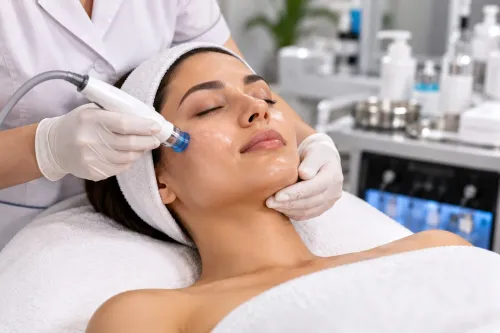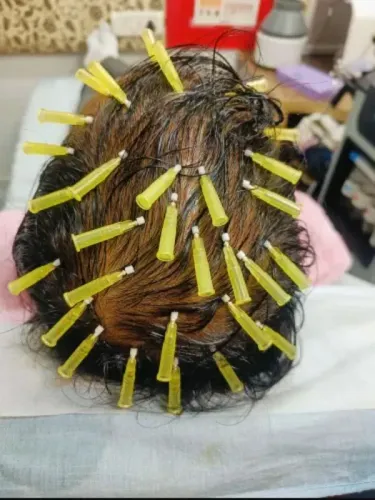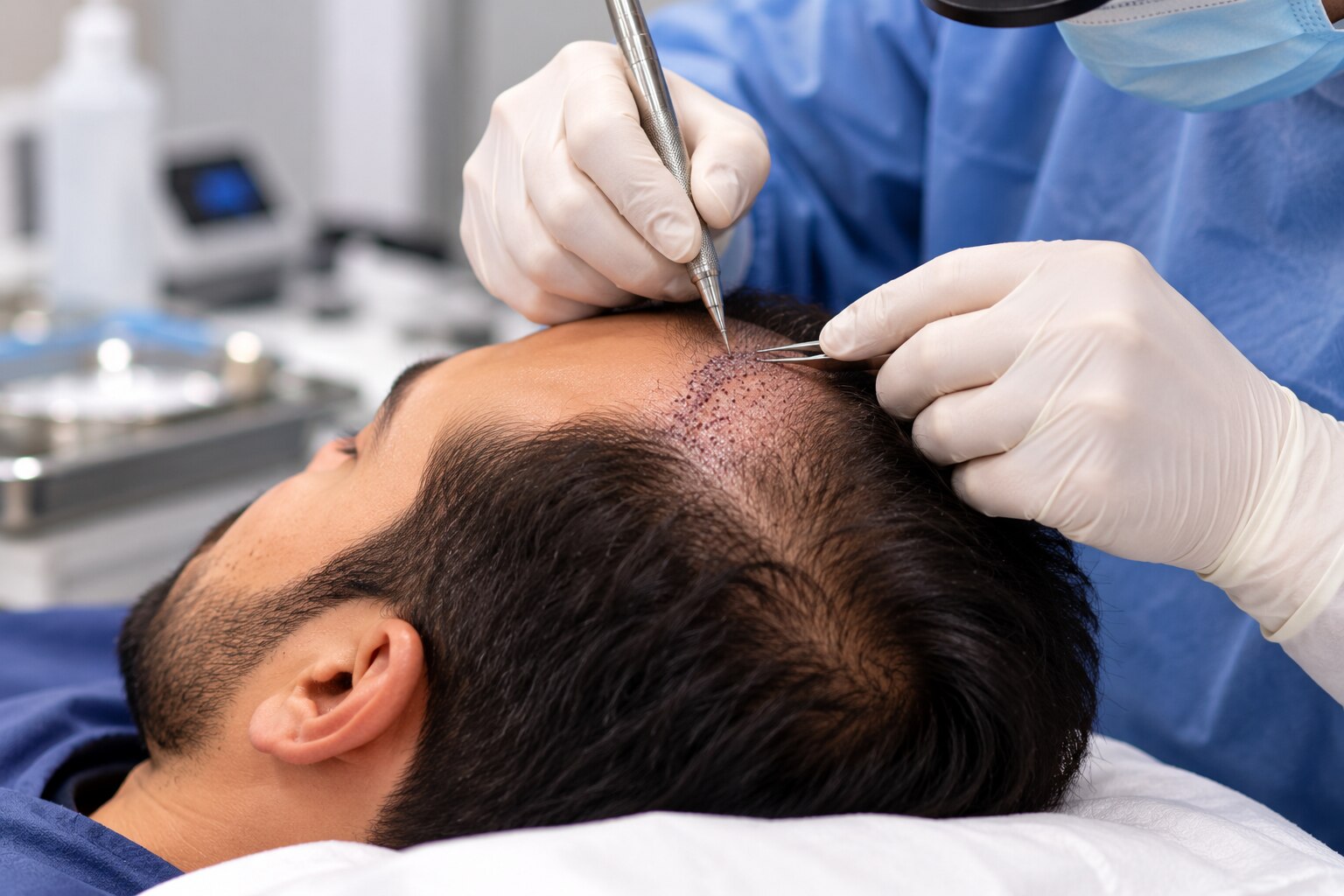
The right choice depends first on the cause and pattern of hair loss, then on donor supply, hairstyle, recovery tolerance and long-term planning. By comparing FUE, FUT, DHI and non-surgical treatments against those factors, you can identify when transplantation fits and when another treatment deserves priority.
Key takeaways
- FUE leaves scattered round scars; FUT leaves one linear donor-area scar.
- Choose a method only after confirming the cause of hair loss and donor supply.
- Budget time for swelling, restricted activity and several months of visible growth.
- Compare clinics by diagnosis, graft plan, unedited photographs and long-term strategy.
How FUE compares with FUT, DHI and non-surgical treatments
FUE versus other hair transplant methods starts with how grafts leave the donor area. FUE removes individual follicular-unit grafts with a punch, leaving multiple small, round scars. FUT removes a strip of scalp and closes the donor area with sutures, leaving one linear scar.
| Method | Graft handling and recovery | Best fit and limitations |
|---|---|---|
| FUE | Individual extraction; often requires donor-area shaving and causes scattered healing sites | Short hairstyles and selective harvesting; extensive extraction can visibly thin the donor area |
| FUT | Strip removal allows efficient handling of many grafts; sutures create a longer recovery and linear scar | Large graft numbers or donor characteristics that make widespread FUE less suitable |
| DHI | Usually implantation through an implanter device, not a separate extraction method | Clinics may combine DHI implantation with FUE extraction; it does not create extra donor hair |
| PRP, Hair Threads and Exosome Therapy | Non-surgical approaches with no graft removal or transplant recovery | Address selected thinning concerns but do not create a new permanent donor supply |
Surgical transplantation redistributes existing follicles; it does not produce new ones. PRP, Hair Threads and Exosome Therapy are intended to influence hair quality, density or scalp conditions, so they suit different causes and degrees of thinning rather than replacing transplantation in every case.
When comparing FUE hair transplant options in Navi Mumbai, judge donor management, graft survival, procedure time, recovery and surgeon skill—not labels such as sapphire FUE or robotic FUE. The same checks matter in fue versus other hair transplant methods.
When diagnosis and donor supply make FUE the wrong choice
Rapid, patchy, inflamed, scarred or unexplained hair loss needs diagnosis before surgery. Androgenetic alopecia can suit transplantation, but alopecia areata, telogen effluvium, traction alopecia and scarring alopecia require different decisions. Thyroid disease, iron deficiency and medication-related shedding can also improve through medical treatment rather than graft placement.
Candidacy checks should establish your Norwood or Ludwig pattern, donor density, hair calibre, age, family history, stability of loss and realistic density expectation. Both FUE and FUT redistribute a finite safe donor supply; neither creates new follicles. Overharvesting can leave the donor area visibly thin, especially with a short haircut.
- Delay or reject FUE when donor hair is inadequate, scalp disease is active, loss is unstable, expectations are unrealistic or the cause requires medical treatment first.
- Ask why a transplant is being proposed if shedding is diffuse or sudden. Treating the trigger first prevents you from spending donor grafts on a temporary problem.
- Discuss untreated native hair with a clinician. Pattern-loss hairs can continue miniaturising around transplanted grafts, so minoxidil or finasteride may be considered; they have separate contraindications and side effects, including minoxidil irritation or unwanted facial hair and finasteride sexual or mood effects.
- For FUE hair transplant or another method in Navi Mumbai, choose based on diagnosis and donor reserve, not the technique label. A stable pattern and adequate donor supply matter more than the extraction method.
What happens during FUE and what recovery really requires
1. Consultation starts with scalp examination, diagnosis, donor-density measurement and planning of the safe donor zone. Confirm the proposed graft count, estimated hairs per graft, hairline design and future-loss plan before agreeing to surgery.
2. The team marks the donor and recipient areas, administers local anaesthetic, then removes individual follicular units with a punch. It creates recipient sites at planned angles and directions before placing the grafts, followed by dressings and same-day discharge.
3. Before leaving, get written instructions for washing, sleeping with your head elevated, medications, exercise and work. Ask when gentle washing begins, how long to avoid strenuous activity, and whether swelling, scabbing, redness, numbness or itching needs review. Many people need several days away from work; heavy exercise usually waits longer.
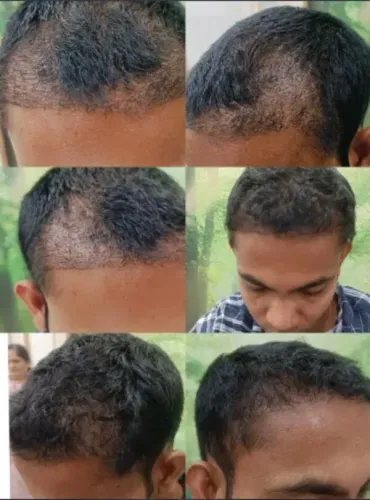
4. Transplanted hairs commonly shed after surgery. Regrowth is gradual, not immediate: assess progress over many months, with cosmetic maturation often around 9–12 months and crown growth commonly slower than frontal growth.
5. Contact the clinic promptly for increasing pain, spreading redness, pus, fever, persistent bleeding or severe swelling. Recognised complications include infection, bleeding, folliculitis, poor growth, an unnatural hairline and donor overharvesting.
FUE avoids one linear scar and can suit short hairstyles, but it is not scarless: it leaves multiple small round scars. Widespread extraction can visibly deplete the donor area when you cut it very short.
How to compare FUE options in Kharghar, Belapur and across Navi Mumbai
Compare clinics using the same clinical evidence, not neighbourhood or package price. A meaningful hair transplant method comparison Kharghar includes diagnosis, donor management, surgical roles, graft planning, aftercare and revision terms. FUE may suit a short hairstyle, but extensive extraction can still cause visible donor depletion when cut very short.
Ask for these answers in writing:
- Confirmed diagnosis and Norwood or Ludwig classification.
- Donor-density assessment, hair calibre, available safe donor area and estimated hairs per graft.
- Proposed graft count, hairline design, graft direction and density.
- A written plan for future hair loss, including whether minoxidil or finasteride should precede surgery.
- The named person performing extraction, recipient-site creation and implantation.
- The specific reason FUT is unsuitable in your case, rather than accepting a generic claim that FUE is better.
- How the clinic prevents overharvesting and what happens if poor growth, low density or an unnatural result requires correction.
- A written revision policy, including eligibility, timing and any additional procedure.
Compare the same factors at every clinic:
| Factor | What to verify |
|---|---|
| Diagnosis | Confirmed cause and Norwood or Ludwig pattern |
| Donor plan | Density, safe reserve, graft count and overharvesting controls |
| Surgical responsibility | Who extracts, creates sites and implants |
| Outcome protection | Medical plan, aftercare and revision policy |
At a fue consultation Belapur, ask these questions before paying a deposit. Be You Aesthetics can be included in that comparison; judge its consultation by the same evidence you request elsewhere.
Related services
FUE Hair Transplant At Be You Aesthetics Clinic, under the expert guidance of Dr. View service → |
PRP Hair Treatment At Be You Aesthetics Clinic, under the expert care of Dr. Supriya Shirukar, PRP (Platelet-Rich Plasma) therapy for hair is an advanced and natural... View service → |
How to judge the plan, photographs and long-term value
A realistic plan is not the one with the largest graft count or lowest price. Hairline design, graft direction and angle, density, hair calibre, curl, graft survival and preservation of future donor reserve determine the result; excessive extraction can leave you with fewer options later.
| Measure | What to compare | Why it matters |
|---|---|---|
| Graft estimate | Count, hairs per graft and donor-density assessment | A large number can conceal poor reserve or overharvesting |
| Photographs | Matching lighting, hair length, camera angle and follow-up duration | Different conditions can exaggerate apparent growth |
| Result coverage | Recipient and donor areas | A full hairline does not prove that the donor area remains healthy |
Transplanted hair redistributes existing follicles; it does not create new ones. Native hair can continue to thin, changing the appearance around the transplant, so ask for a written response if growth is poor, density falls short or revision becomes necessary.
For fue hair transplant options in Navi Mumbai, compare that plan rather than a package price. The same applies when weighing fue hair transplant or another method in navi mumbai.
Choose FUE when your diagnosis, donor supply, pattern stability and hairstyle support it. Consider FUT, or medical and non-surgical treatment, when those conditions point elsewhere.
Frequently asked questions
How does FUE compare with FUT, DHI and non-surgical hair-loss treatments?
FUE extracts individual follicular units through small punches, while FUT removes a scalp strip and closes it with sutures. DHI is a placement technique that can follow extraction, not a separate donor-area method. Non-surgical treatments do not transplant follicles and suit different causes or stages of hair loss.
When is FUE the wrong choice for hair loss?
FUE is the wrong choice when the diagnosis is unclear, active scalp disease is untreated, or the donor area cannot supply enough healthy grafts. A consultation should assess the pattern of loss, scalp condition, hair calibre and donor density before recommending surgery.
What happens during FUE, and what does recovery require?
The team maps the hairline, numbs the scalp, extracts individual grafts and places them in prepared recipient sites. Recovery requires following washing instructions, protecting grafts from friction, limiting strenuous activity as advised and allowing months for new growth.
How should you compare FUE options in Kharghar, Belapur and across Navi Mumbai?
Compare the doctor’s diagnosis, who performs each surgical step, the proposed graft count, donor-area plan, aftercare and complication support. Ask to see consistent, unedited before-and-after photographs rather than relying on package names.
How can you judge the long-term value of an FUE plan?
Judge whether the plan protects donor supply, accounts for future hair loss and uses a natural hairline design. Review graft numbers, medication or maintenance options, expected timelines, total follow-up and what happens if density is lower than planned.
Related services
PRP Treatment for Skin Regeneration PRP Treatment for Skin Regeneration At Be You Aesthetics Clinic, under the expert care of Dr. Supriya Shirukar, the PRP (Platelet-Rich Plasma) treatment offers a revolutionary and... View service → |
Hair Threads Treatment At Be You Aesthetics Clinic, under the expert care of Dr. Supriya Shirukar, our Hair Threads Treatment offers a revolutionary, non-surgical solution... View service → |
Exosome Therapy At Be You Aesthetics Clinic, Dr. Supriya Shirukar offers advanced Exosome Therapy — a revolutionary, non-surgical treatment designed to rejuvenate,... View service → |
Keywords